
October 22, 2026
What Are The Key Considerations for Selecting an Annealing Furnace?
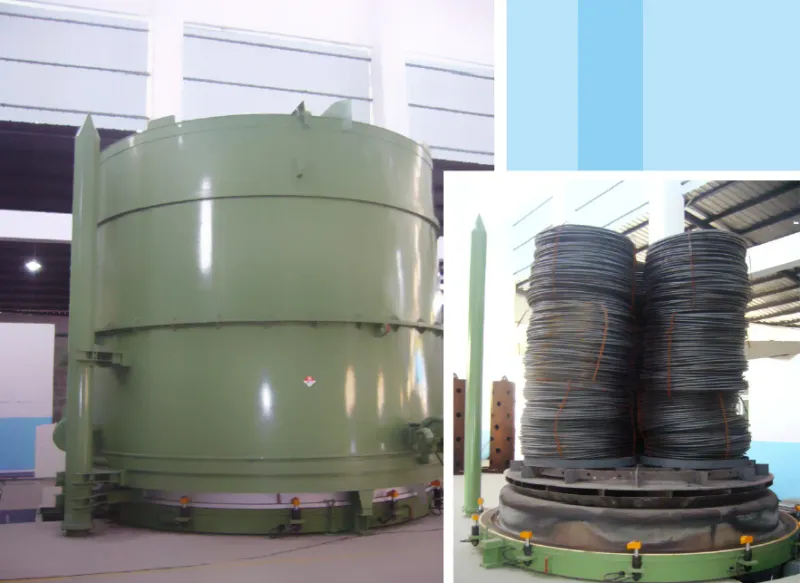
Steel wire, rod, strip, and fastener producers increasingly favor pit-type annealing furnaces (also called well-type furnaces) because they handle heavy, tightly coiled charges in a compact footprint. As energy and labor costs rise, the market is moving toward intelligent control, high reliability, consistent quality, and lower energy consumption. These advantages matter most for plants processing a wide range of steel grades, where one furnace must cover several processes.
When choosing a pit-type annealing furnace, buyers should evaluate the equipment against the following factors:
1. Working Temperature and Temperature Uniformity
- Match the maximum working temperature to the process. Recrystallization and stress-relief annealing run below Ac_1 (roughly 550–700 °C), while spheroidizing and full annealing require higher temperatures, so the furnace must have adequate headroom above the normal set point.
- Demand a guaranteed temperature uniformity across the working zone — typically ±5–10 °C after a load survey with the furnace fully charged. Uniformity directly controls hardness variation and metallurgical consistency from coil to coil.
- Check how uniformity is achieved: proper heating-element or burner layout, multiple control zones, and — for larger furnaces — forced circulation fans.
2. Heating Method, Installed Power and Specific Power
- Decide between electric resistance heating and gas firing based on local energy prices, temperature range, and atmosphere requirements.
- Size the specific power (installed power per ton of charge, kW/t) to the charge weight and required cycle time. Too little power lengthens heating and wastes output; too much creates localized overheating and shortens element life.
- Confirm that the power supply, heating elements, and control system are matched and that the elements are easy to replace.
3. Protective Atmosphere, Sealing and Atmosphere Control
- For bright or clean annealing, the furnace (or its inner cover/retort) must be gas-tight and able to operate with a protective atmosphere such as nitrogen or nitrogen-hydrogen mixtures.
- Ask about dew-point control and gas consumption, since the atmosphere quality determines surface brightness and decarburization.
- Inspect the sealing of the cover, fan shaft, and thermocouple entries; air ingress and atmosphere leakage are the most common causes of inconsistent surface quality.
4. Charge Weight, Loading Method and Materials Handling
- Specify the rated charge weight and the actual loading pattern (wire coils, bundles, baskets, or stacked parts). Loading density strongly affects heating time and temperature uniformity.
- Review the cover/lid lifting mechanism, loading crane, base plate, and spacers to ensure fast, safe, and repeatable charging and discharging.
- Confirm the furnace can accept the largest and heaviest charge the plant expects to run.
5. Heating and Cooling Rate Control
- The furnace must control the heating rate as well as the set-point temperature, since the ramp rate influences grain growth and distortion.
- For grades that need faster cycles or controlled cooling, check the cooling capability — outer water jacket, forced-air cooling, or an internal cooling system — so that cooling does not become the bottleneck.
6. Furnace Lining and Energy Efficiency
- Compare lining materials and insulation thickness (ceramic fiber modules vs. refractory brick). Better insulation reduces heat loss and shortens cycle times.
- Ask for the specific energy consumption (kWh/t or gas per ton) under a representative cycle, together with heat-recovery options where applicable.
- Review the sealing of the base, cover, and any gaps that allow heat to escape during long soaks.
7. Control System, Automation and Diagnostics
- Look for multi-zone programmable temperature control with stored recipes, so operators can switch between steel grades without manual re-tuning.
- The control system should provide real-time status display, multi-level alarms, intelligent fault diagnostics, and data logging for quality traceability.
- Consider how easily the system integrates with plant-level production and energy monitoring.
8. Build Quality, Safety and Reliability
- The furnace body, cover, fan, seals, heating elements, and lifting mechanism should be built for high safety and durability, with a high degree of automation to reduce manual handling.
- Verify safety interlocks for over-temperature, atmosphere, and cover-lifting operations.
9. Supplier Service, Spare Parts and Documentation
- Ensure the manufacturer offers strong service capability, high-standard support, and fast emergency response.
- Comprehensive technical documentation, operating manuals, and maintenance guidelines should be provided together with long-term technical support.
- Pricing for non-standard spare parts and wearing components (elements, fans, seals, thermocouples) should be fair and transparent.
Investing in a furnace with high overall build quality and a well-matched specification minimizes long-term operational headaches, reduces unplanned downtime, and lowers lifecycle maintenance costs.