
October 22, 2026
What Is Electro Galvanizing?
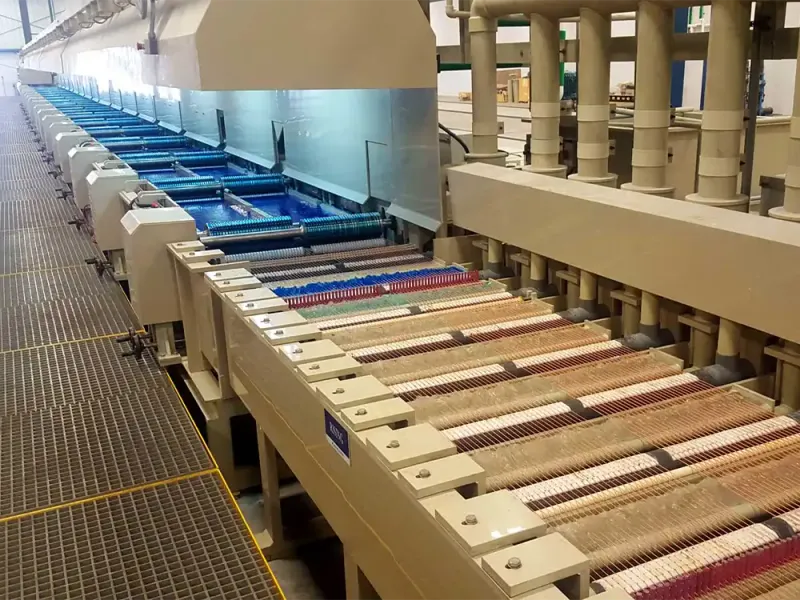
Electro galvanizing is a surface-finishing treatment applied to steel parts, products, and components. It is especially useful when parts must be formed after coating: the process provides corrosion protection without disrupting edge integrity or part geometry, which makes it a good fit for press lines, panel weldments, and bent flanges.
On production lines, electro galvanizing supports parts that require tight surface control. It lets manufacturers avoid spatter, flaking, and thick buildup, because zinc is deposited uniformly across edges, curves, and recessed cuts.
It is also often chosen when downstream coating or bonding matters, since it gives firm bonding for powder coat, e-coat, and structural adhesives. That reliability saves cost and rework during final assembly and inspection.
In this article, we walk through where electro galvanizing performs best, break down the process steps and benefits, and compare it with other surface treatments.
1. What Is Electro Galvanizing?
Electro galvanizing uses an electric current to deposit a uniform zinc layer. The steel sheet passes through a zinc-based electrolyte bath under direct current, which produces uniform zinc bonding without disturbing the substrate geometry or mechanical strength.
The process is optimized for environments where dimensional tolerance must not shift. Coating thickness stays consistent across flat sections, draw edges, and punched holes. It also preserves formability, surface bonding, and paint readiness across large production volumes.
Compared with thermal (hot-dip) methods, electro galvanizing avoids grain growth and heat-induced distortion. It is preferred for stamped enclosures, automotive panels, and electrical housings where coating quality affects downstream yield.
2. Process of Electro Galvanizing
Electro galvanizing is a continuous, multi-step process. Each stage prepares, coats, or protects the steel without altering its form. Below is a practical breakdown of how the process runs in a modern production facility.
2.1 Surface Cleaning
The process starts with thorough surface cleaning. Oils, rolling residues, and light oxides are removed by alkaline and electrolytic cleaners. Cleaning is essential: if the steel is not clean, current flow is inhibited and zinc adhesion is undermined.
2.2 Acid Pickling
Next, the steel passes through an acid pickling line. This removes residual oxides and activates the surface. In its non-activated state, zinc will not bond uniformly, particularly around edges or cast parts.
2.3 Zinc Plating
The steel then enters the plating bath. A direct current passes through the electrolyte, causing zinc to deposit on the surface. The coating thickness is controlled by the line speed and current density. The goal is a uniform, thin layer that can be formed and painted.
2.4 Rinsing and Neutralizing
After plating, the surface is rinsed to stop any further reaction. Leftover acid is neutralized, and the pH is balanced with neutralizing agents.
2.5 Post-Treatment
In the last step, a passivation layer is applied. It adds fingerprint resistance and extends shelf life. On painted surfaces, this layer improves the quality of the finish and the primer bonding. It is the final safeguard before the parts move downstream.
3. Electro Galvanizing vs Hot-Dip Galvanizing: Key Differences
Choosing between electro galvanizing and hot-dip galvanizing is not only a question of corrosion protection; it is also a question of how the coating behaves across your entire process. The following aspects affect forming, coating, and part performance.
3.1 Precision vs. Bulk Protection
Electro galvanizing gives you more control. You can apply zinc in a clean, even layer that forms with the part without disturbing its tolerances. This is critical in thin-gauge steel work, punched shapes, and high-speed stamping.
Hot-dip galvanizing, by contrast, applies a thicker coating and introduces heat. On formed parts this can cause warping, uneven buildup, or clogged holes, all of which compromise assembly fit and subsequent machining.
When your parts go directly to painting or to fit-critical assembly, electro galvanizing keeps them within spec without secondary cleanup.
3.2 Coating Behavior in Finishing Lines
With electro-galvanized steel, your paint line runs more predictably. The uniform, smooth surface has good affinity for e-coat, powder, and structural adhesives, so abrasive surface cleaning and extra primer are usually unnecessary.
Hot-dip components, on the other hand, can slow you down. Their coarser surface can interfere with coating flow and trap air. Some areas may need sanding, phosphating, or extra bake cycles, which increases cycle time.
So if visual quality and downstream finish performance are critical, electro galvanizing offers a cleaner handoff to final processing.
3.3 Service Conditions and Corrosion Load
Hot-dip galvanizing outperforms raw steel outdoors for longer. Its dense zinc-iron alloy resists abrasion, salt spray, and mechanical wear, and it is commonly used for poles, grating, and structural framing.
Electro-galvanized parts play a different role. They perform reliably indoors or under paint, but a bare zinc coating in a moist or aggressive environment will degrade unless it is post-treated or painted.
4. Benefits of Electro Galvanizing
Here are the common benefits of electro galvanizing that directly support forming, coating, and assembly operations.
- No Distortion from Thermal Exposure: The process runs cold, so part geometry stays uniform and stress buildup in thin-gauge and stamped sections is avoided.
- Consistent Zinc Layer on Complex Surfaces: The coating covers holes, bends, and edges evenly, reducing surface variation across high-speed forming operations.
- Optimum Bonding and Coating: Adhesives and coatings stick to the surface without extra preparation. This increases finish quality and shortens paint line time.
- Post-Coating Forming without Flaking: The zinc layer remains intact during bending or shaping, so coated blanks can be formed without risk of coating failure.
- Fewer Defects and Less Line Rework: The stable surface avoids visual and bonding problems, keeping scrap low and inspection times short on the production floor.
5. Applications of Electro Galvanizing
Electro galvanizing is used in many manufacturing settings. Below are common application areas where it brings unique advantages.
5.1 Automotive Body and Structural Panels
Electro-galvanized steel is widely used in automotive body parts. Its fine, smooth finish supports tight clearances and a clean paint finish. Because the surface has no defects, it can be stamped, welded, and bonded. This makes it suitable for inner panels, closures, and welded assemblies.
5.2 Electrical Enclosures and Cabinets
Electro galvanizing is well suited to cabinets and electrical housings. The smooth, corrosion-resistant, paint-ready surface produces clean bends and sealed joints that will not crack, and it helps ground points and terminal cutouts with minimal preparation.
5.3 Appliance Housings and Covers
Appliance manufacturers use electro galvanizing for outer panels, where it supports a quality finish on high-speed press lines. The formed edges do not delaminate, and the uniform coating supports downstream branding and powder-coating compatibility.
5.4 Office Furniture and Filing Systems
Steel is widely used in office systems, which require a clean surface. Electro galvanizing helps preserve sharp edges and smooth corners. The paint shows no bubbling or inconsistent coverage, and the coating protects parts during storage and final assembly.
5.5 HVAC Components and Ductwork
In HVAC fabrication, zinc-coated parts must be shaped without cracking. Electro galvanizing allows bending, cutting, and roll-forming, and it protects against indoor corrosion without making the part too thick. The coating also performs well under insulation or sealants.
5.6 Metal Ceilings and Architectural Panels
Electro-galvanized steel is heavily used in ceiling grids and wall panels. The thin coating supports precise bending and punched patterns, and it holds paint well for decorative or functional finishes.
6. Final Verdict
Electro galvanizing is the preferred choice when surface quality, dimensional control, and downstream compatibility are the priority. It balances corrosion resistance and production efficiency without thermal stress or unpredictable buildup.
It also supports reliable forming, neat finishing, and stable coating performance, which is why it is widely adopted for stamped parts, appliance panels, and electrical enclosures. It is not, however, the best choice for highly corrosive environments without a topcoat.
Choosing electro galvanizing helps you maintain process flow, reduce surface defects, and meet finish requirements with minimal post-treatment. Done right, it becomes a dependable part of a lean, high-throughput production system.
7. FAQs
- Q1: Can you spot weld electro-galvanized steel without surface prep?
Yes, electro-galvanized steel can be spot welded in most applications. The thin conductive zinc layer does not seriously hinder weld nugget formation, though it may increase electrode wear, so routine maintenance is advised.
- Q2: How does electro galvanizing affect edge sharpness after forming?
The coating preserves edges during bending and punching. Because the zinc layer is thin and ductile, it does not round corners or chip during post-coating forming.
- Q3: Is electro-galvanized steel suitable for laser cutting?
Yes. It handles laser cutting precisely without generating excessive spatter, and the zinc layer stays intact near the cut zone. Edge oxidation should still be managed with proper fume extraction and cut parameters.